Behind the Build: Why I Created Primed (and What I've Learned So Far)
About six months ago, I started a side project in my spare time. Not to launch a new company, but to go deeper into something I believe is going to reshape how we work: AI.

About six months ago, I started a side project in my spare time. Not to launch a new company, but to go deeper into something I believe is going to reshape how we train: AI.
As a long-time endurance athlete and tech professional, I felt it was important to move beyond surface-level knowledge. I didn't want to just read about agentic AI and LLMs. I wanted to build with them. So I carved out time to explore tools like Cursor, OpenAI's Codex, and Replit, and started experimenting.
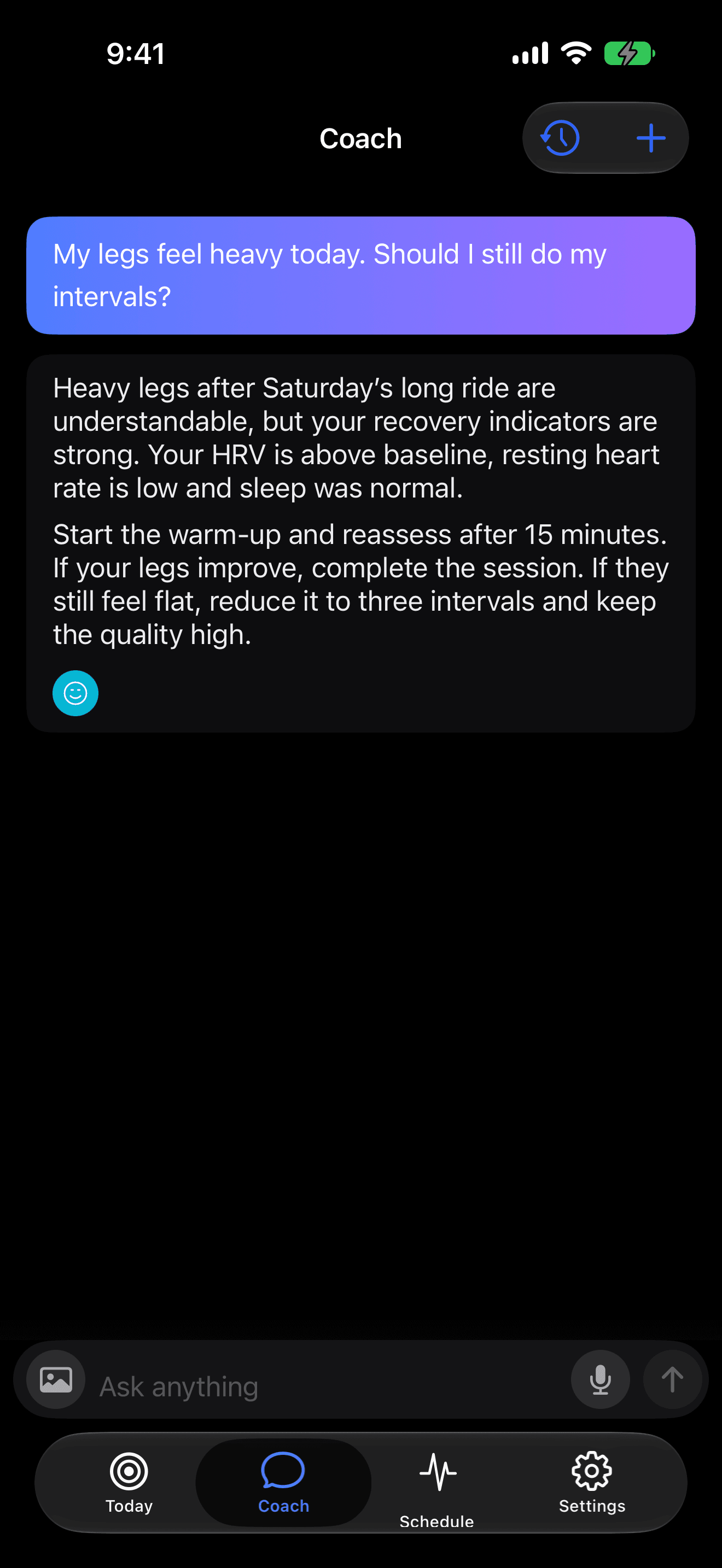
The result is Primed, a coaching assistant that feels more like a teammate than a basic training app.
Key takeaways
- Started as a side project to learn agentic AI properly.
- Became Primed: coaching that adapts in real time.
- Reads schedule, fitness, and recovery before suggesting anything.
- Helpful without being annoying is the hardest part.
The Idea: Smart Coaching for Everyone
Traditional coaching apps give you static plans. What if your coach could adapt in real-time, understanding your fatigue, your schedule, and your goals? That got me thinking.
So I built Primed. It's an AI-first coaching tool that:
- Analyzes your training data as it happens
- Reviews your schedule, fitness, and recovery in real time
- Surfaces context-aware suggestions based on what's happening now
Everything is designed around helping you train smarter, not just harder.
How It Works
Primed connects to your training devices and builds a dynamic picture of your fitness. It reads structured and unstructured data from Garmin, Oura, and other sources. Then it uses that to generate helpful coaching nudges or content when it makes sense.
When it offers a suggestion, it's not just reacting. It's using what you've recently completed, what's coming up, and what might need attention to decide what's actually helpful.
That might mean adjusting tomorrow's workout based on today's fatigue, prepping for what's next in your training block, or reminding you about recovery you've been skipping.
What's Been Challenging
Here are a few things that turned out to be harder than expected:
Intent ranking: When multiple responses from the LLM are technically good, how do you pick the most useful one for an athlete?
Being helpful without being annoying: There's a very fine line. Too passive and it's ignored. Too active and it becomes distracting during training.
Context management: Figuring out what's relevant at any given moment is more complex than just window size or token count.
I also had to learn more about sports science integration, data synchronization, and balancing performance insights with privacy.
What's Next
Primed is still in development, but it's usable. I've been testing it daily and have started letting other athletes try it too. I want to see how people use it, and where it breaks down.
If you're training for a marathon, triathlon, or just want smarter coaching, I'd love to hear from you.
Summary
Primed started as a side project to learn agentic AI properly and became something else: coaching that adapts in real time, grounded in your actual schedule, fitness, and recovery. The hardest design problem isn't the AI — it's being useful without becoming noise.