Starting Up Then and Now: 20 Years of Change
Twenty years ago I co-founded my first startup, Recommendation Ventures. Out of that came Scouta, a personalised media recommendation app that was ahead of its time. Looking back at how the startup landscape has been reshaped by technology, capital, and now AI.

Twenty years ago I co-founded my first startup, Recommendation Ventures. Out of that came Scouta, a personalised media recommendation app that was ahead of its time. Scouta went on to win several awards and gave me my first real taste of what it meant to launch a product into the world.
Looking back, it feels like a different world. If you wanted to launch a tech company back then you pieced things together from whatever was available. We ran on Slicehost, a small hosting company that gave developers virtual private servers before the cloud was mainstream. It felt revolutionary at the time, but compared to today's platforms it was still fragile, hands-on, and limited.
Fast forward to today, as I build Primed, and the contrast is huge. The startup landscape has been reshaped by technology, capital, and now AI.
Key takeaways
- Twenty years ago, hosting and tools were the bottleneck.
- Today AI acts as a co-founder for solo builders.
- What used to need a team now fits in days.
- Resilience, relationships, and vision haven't changed.
Starting a Startup 20 Years Ago
Back in the early 2000s:
- Technology constraints: Hosting was still a challenge. Slicehost gave us more freedom than running servers in a cupboard, but scaling meant cloning slices, patching manually, and hoping nothing fell over in the middle of the night. Frameworks and open source libraries were scarce, so you wrote a lot from scratch.
- Funding and support: In Perth there were few angel investors, almost no venture funds, and certainly no accelerators or coworking hubs. You built with whatever resources you had and hoped you could convince someone to back you later.
- Team and tools: Collaboration was clunky. No Slack, no GitHub, no Notion. A small team spent more time wrestling with logistics than building product.
Starting Up Today
Now the picture is entirely different:
- Cloud platforms scale instantly and reliably.
- Open source ecosystems and APIs mean you can assemble rather than reinvent.
- Startup communities are richer, with funding, mentoring, and global reach available from day one.
And the biggest shift: AI is now a co-founder in all but name.
Building Primed: A Solo Founder's Journey
I am building Primed largely on my own, but I am not doing it alone. With over 30 years in the tech industry, I know a few tricks. I know how to architect systems, pick the right stack, and avoid rabbit holes.
The real difference is how AI changes the game. Tasks that once required a whole team, like writing code, drafting copy, designing visuals, or testing integrations, can now be accelerated with the help of an AI partner. What used to take weeks I can do in days. What used to require a developer, designer, and writer I can manage myself.
That doesn't make the journey effortless. Startups are still about resilience, persistence, and vision. But the multiplier effect of AI is undeniable.
What Hasn't Changed
Despite all the advances, some things remain constant:
- Resilience still matters. There are always setbacks and pivots.
- Relationships are still the foundation. Customers, partners, and community are everything.
- Vision is still the anchor. The tools may have changed, but the need to solve real problems has not.
Why This Matters for Primed
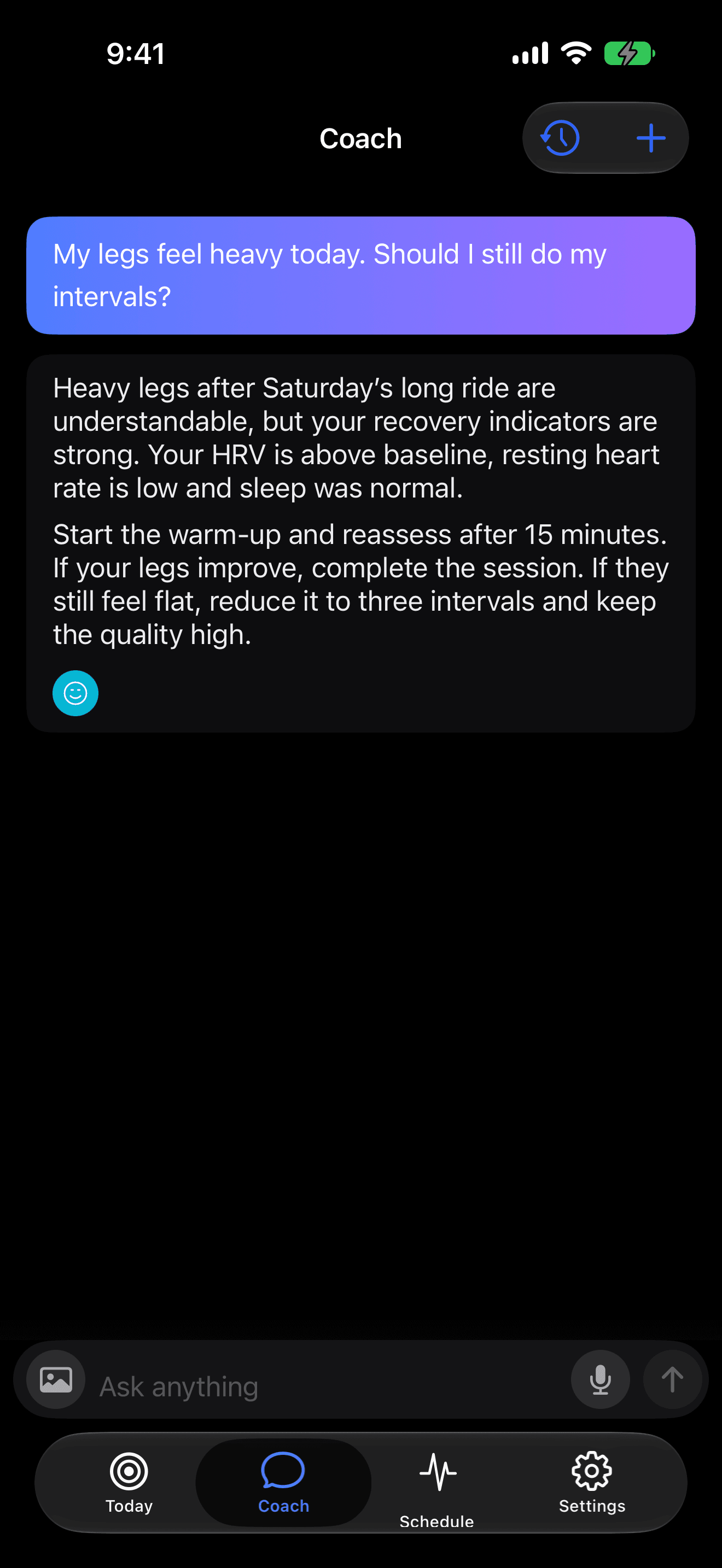
The speed at which Primed is coming together would have been unimaginable 20 years ago. I am not just building faster for the sake of speed. I am building a platform that helps athletes embrace this new era of training. Smart. Personalized. AI-driven.
Primed is the coaching platform I wish I had when I started my first triathlon. And soon it will be available to anyone who wants to take advantage of these new tools.
Summary
Twenty years on, the multipliers are stacked differently. Cloud, open source, and AI compress what used to need a team into something a single founder can ship. Primed exists because that compression now lets one person build the platform a much larger company would have needed.
Resilience, relationships, and vision haven't changed. The leverage around them has.