Why Recovery Scores Disagree, and How Primed Interprets Conflicting Signals
Garmin says you need 48 hours of recovery, Oura gives you an 88 Readiness score, and WHOOP shows a yellow 52%. Why do wearable algorithms disagree, and how does Primed find the physiological truth?
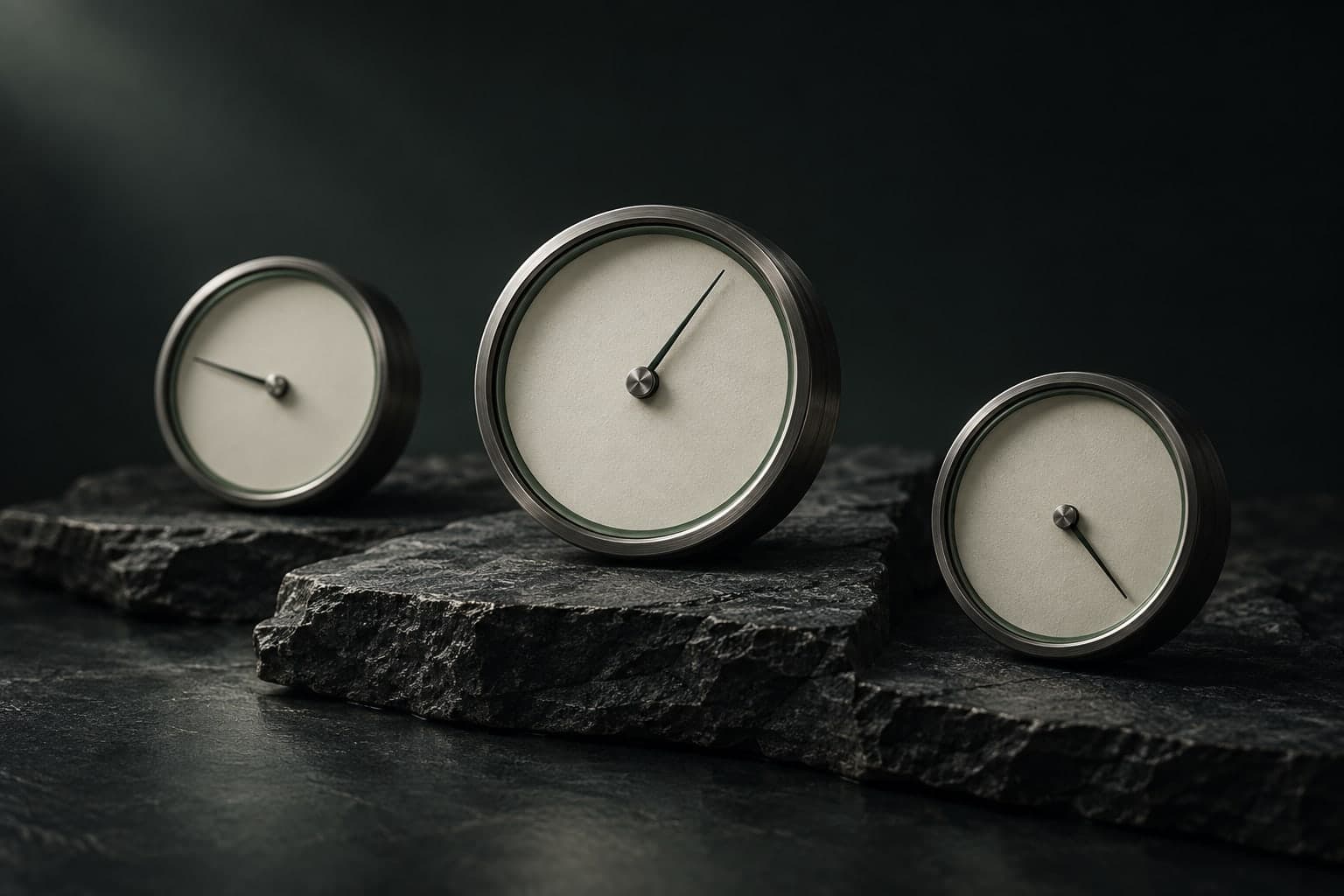
If you wear more than one recovery tracker, you have almost certainly encountered the "Wearable Civil War":
- Garmin: "Recovery Time: 54 Hours — High Training Stress."
- Oura Ring: "Readiness: 88 / Optimal — Ready for a challenge."
- WHOOP: "Recovery: 48% (Yellow) — Moderate Strain Recommended."
Standing in your kitchen at 6:30 AM looking at these three numbers, you are left with zero actionable clarity. Should you do your planned 5x5-minute VO2 max intervals or stay on the couch?
Why do three world-class hardware platforms looking at the same human body reach three completely different conclusions?
Key takeaways
- Proprietary recovery algorithms disagree due to different baseline windows and weighting.
- WHOOP emphasizes sleep debt; Oura prioritizes temperature; Garmin weights all-day stress.
- Composite 1–100 scores obscure the underlying physiological cause.
- Primed extracts raw primitives and uses an arbitrated evidence bundle.
Why Wearable Algorithms Disagree
Wearables do not measure "recovery" directly. Recovery is a complex biological state involving glycogen replenishment, neuromuscular repair, autonomic balance, and immune health.
Instead, wearables measure a handful of biometric signals and run them through proprietary weighting models. The disagreement comes from three fundamental differences:
1. Different Baseline Calculation Windows
How a device defines your "normal" baseline dramatically shifts today’s score:
- Oura uses a rolling 14-to-30-day baseline for HRV and resting heart rate.
- WHOOP weights a dynamic 7-to-28-day baseline with heavy emphasis on recent acute strain.
- Garmin incorporates acute 7-day training load along with all-day optical heart rate variability stress.
If you had a very heavy training block two weeks ago, a 7-day baseline will treat today's recovery differently than a 30-day baseline.
2. Differing Proprietary Feature Priorities
Each company believes a different metric is the "king" of recovery:
- Oura places heavy weighting on nocturnal skin temperature and sleep architecture (deep vs REM balance).
- WHOOP penalizes recovery aggressively if you accumulate sleep debt relative to your strain-calculated sleep need.
- Garmin factors in daytime stress scores and the total anaerobic work recorded in your recent FIT activity files.
If you slept 6 hours (accumulating sleep debt) but your sleep was extraordinarily deep and your temperature was perfectly low, WHOOP will give you a yellow or red recovery, while Oura will award you a high readiness score.
3. Sampling Methodologies (Nocturnal Average vs Peak Epochs)
- Oura computes a mathematical 5-minute rolling average across the entire night's sleep window.
- WHOOP measures HRV predominantly during your final slow-wave sleep (SWS) epoch before waking.
- Apple Watch takes periodic intermittent SDNN readings throughout the day and night.
Because autonomic tone fluctuates across sleep cycles, measuring during different windows yields different numbers.
How Primed Solves the Conflict: The Arbitrated Evidence Bundle
When building Primed, we realized that trying to average these three branded scores together (e.g. (88 + 48 + 40) / 3 = 58) is useless. An average of three disagreeing black boxes is just another black box.
Instead, Primed’s backend (EvidenceBundleService and AdjustmentArbitrationService) strips away the proprietary scores and constructs an Arbitrated Evidence Bundle from raw physiological primitives:
                      RAW TELEMETRY INPUTS
     ┌───────────────┬───────────────────┬──────────────────┐
     ▼               ▼                   ▼                  ▼
 Garmin FIT      Oura Ring           WHOOP Strap        Apple Watch
 (Power/TSS)   (Temp, rMSSD, Deep)  (Respiration, Debt)  (Resting HR)
     │               │                   │                  │
     └───────────────┼───────────────────┼──────────────────┘
                     ▼                   ▼
     ┌──────────────────────────────────────────────────────┐
     │              EVIDENCE BUNDLE ARBITRATION             │
     ├──────────────────────────────────────────────────────┤
     │ 1. Raw Nocturnal rMSSD vs 30-Day Rolling Nadir       │
     │ 2. Skin Temperature Deviation (Δ Temp > 0.4°C?)      │
     │ 3. True Workload: 7-Day & 14-Day Cumulative TSS      │
     │ 4. Sleep Efficiency & Restorative Sleep Minutes      │
     │ 5. Subjective Muscle Soreness & Athlete Slices       │
     └──────────────────────────────────────────────────────┘
                             │
                             ▼
                   UNIFIED COACH DECISION
            "Execute", "Modify", or "Swap" + Why
The Arbitration Hierarchy
When signals conflict, Primed evaluates them according to a clear physiological hierarchy:
- Immune & Cardiac Red Flags (Top Priority): If skin temperature is elevated $\ge +0.4^\circ\text{C}$ or resting heart rate is elevated by $\ge 5\text{ bpm}$, this overrides high HRV. The system blocks high intensity regardless of other scores.
- True External Load vs. Sleep Debt: If WHOOP shows a yellow score purely due to a 45-minute sleep debt, but raw rMSSD is nominal and yesterday was a rest day, Primed permits the threshold session because autonomic capacity is intact.
- Neuromuscular & Subjective Check: If Garmin predicts high recovery time due to yesterday's high-torque power file, Primed initiates an exploratory 15-minute warm-up check rather than blindly canceling the session.
The Output: Clear, Unambiguous Coaching
Instead of leaving you to decode three conflicting charts, Primed gives you a clear verdict:
"Oura gave you an 88 because your resting HR and temperature are pristine. WHOOP flagged yellow due to 45 minutes of sleep debt from your late bedtime. Because your raw autonomic signals are strong and you had a full rest day yesterday, your body is ready for today’s session. We’ve kept the 4x8-minute intervals as scheduled."
Summary
Wearables don't disagree because one is broken; they disagree because they are measuring different slices of your physiology through different algorithmic lenses.
Primed removes the guesswork by looking directly at the underlying biological primitives, resolving contradictions logically, and giving you one clear recommendation every morning.