IFA 2026: Fitness Tech Is Moving Beyond the Screen
Screenless bands, sensing necklaces and bedside radar point to a new fitness challenge: making sense of health data across devices, training and everyday life.
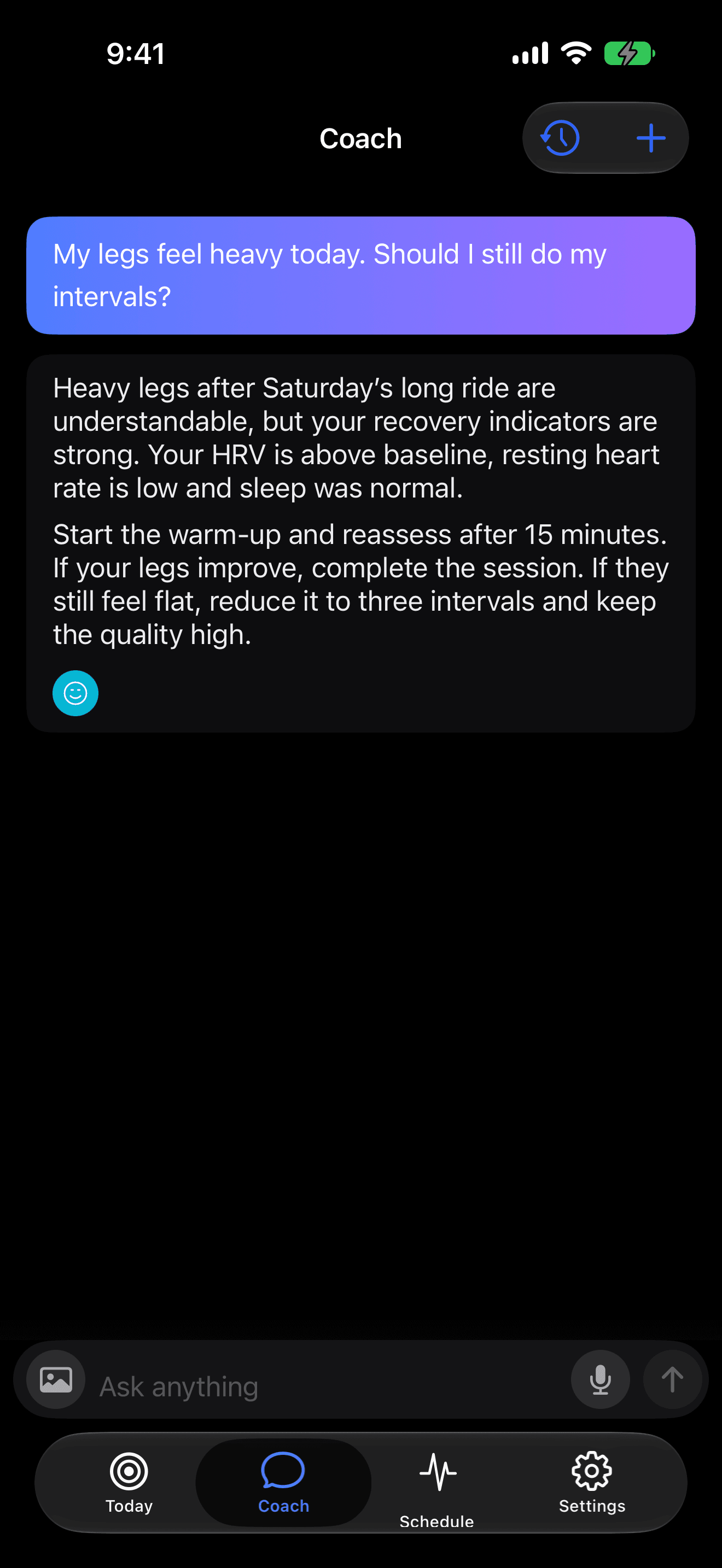
The morning after a long ride, an athlete can already have plenty of information and very little clarity. A watch has recorded the workout. A ring has scored the night. A food app has part of yesterday's intake. The legs have their own opinion.
The fitness and health announcements around IFA 2026 suggest that collecting those signals is becoming less demanding. Bands lose their screens. A necklace attempts to record meals. A bedside speaker senses sleep. Software promises to explain what it all means.
For me, the interesting shift is where the effort goes. As sensing moves into the background, interpretation becomes the experience. The next challenge is understanding the evidence across sources well enough to make a useful decision.
This is an analysis of announcements and published product information checked on 5 September 2026, during IFA's 4–8 September show. It is not a hands-on review or a complete account of a show still in progress. Performance claims below belong to the manufacturers unless stated otherwise.
Updated 6 September: added Tuya’s sensing-to-action example and newly verified Speediance IFA coverage. These additions include announcements made earlier in the show.
Key takeaways
- Passive sensing can reduce the daily effort of tracking.
- AI interpretation is becoming part of the product itself.
- Separate insights still need context across devices and everyday life.
- Better decisions require trustworthy evidence, uncertainty and athlete feedback.
Less attention spent collecting
Luna Band is a straightforward example. IFA reporting confirms the start of global shipping for the screenless tracker, following its earlier CES debut. Its proposition combines activity and sleep tracking with the LifeOS AI platform and no required subscription.
The significance is the combination: a quieter object on the body, with software positioned as a daily guide. Removing the display may reduce the temptation to check another number. Whether the resulting advice deserves attention is a separate test.
Anker takes the idea further with SleepLab Pro. Its IFA announcement describes a bedside system using 60 GHz millimetre-wave radar to sense sleep without body contact, alongside audio and lighting. Launch timing and pricing were still to be announced in that release. Anker's product page describes sleep reports and breathing routines that adapt to recent sleep patterns.
This is a useful change in the question being asked. Instead of asking someone to wear another device overnight, the room becomes a source of information. That could make consistent tracking easier for people who dislike sleeping with a watch or ring. It does not, by itself, establish how accurately the system measures sleep or how much its interventions help.
There are still devices in this future, and there are still apps. The emerging promise is less work for the person supplying the data.
Tuya’s 5 September IFA announcement adds another step: the company describes a radar sleep speaker that can trigger home functions, such as switching off lights when it detects sleep, as well as generating sleep reports from contactless sensing.
That moves the proposition from collecting information to acting on it. The question becomes whether the action fits the person and the situation. Useful automation needs clear permissions and an easy override when a sensor gets the context wrong. Tuya’s demonstration of connected home functions does not establish that its health data can be exported into an athlete’s coaching tools.
A new signal still needs context
Speediance Strap adds a training-specific example. Reporting from its IFA stand describes a screenless band using greenteg technology to estimate core body temperature from the wrist. This is an estimate, not a direct internal measurement. The report also says a current retail date and price remain unconfirmed.
The Strap was already a prototype at CES. Speediance’s January announcement describes combining training, sleep and temperature signals in its Wellness+ platform, with guidance spanning strength and endurance activity.
For coaching, the interesting prospect is another piece of context alongside the session itself. The test is whether that signal changes advice usefully and reliably. A new temperature graph alone does not answer how today’s conditions, recent workload and the athlete’s own feedback should affect the plan. The IFA report establishes the product direction; it does not establish accuracy during real-world training.
Nutrition joins the passive-sensing experiment
ODYSS introduced its N1 dietary necklace in an IFA announcement on 4 September. The N1 product description says it uses visual capture and AI to detect eating events, identify food and estimate portions. Its advertised eating-event accuracy comes from internal testing of pre-production units under controlled conditions.
For an endurance athlete, the attraction is obvious: meal logging asks for effort precisely when life is busy. A more complete record could give a coach better questions to ask about a demanding training day.
But detecting a meal is different from knowing its nutritional content. Portion estimates, hidden ingredients and food outside the camera's view matter. A missed snack should remain missing information; it should not silently become evidence that the athlete ate nothing.
There is also a social cost to visual capture. ODYSS says a physical button disables the camera and microphone, and that images are deleted after processing. Those controls deserve scrutiny alongside accuracy: a device worn around other people needs to be understandable to them too.
The idea is promising because it targets a tedious task. Its usefulness will depend on whether errors are visible and correctable, rather than concealed behind a confident meal score.
Smaller wearables, larger interpretations
RingConn's Gen 3 showcase announcement emphasises continuous tracking and vascular trends over time. It describes calibration using externally measured blood pressure values and explicitly says the product does not replace medical advice. That distinction matters: a trend derived from ring sensors is not interchangeable with a clinical measurement.
Circular's Ring 3 Pro and Slim offer another version of quieter interaction. Reporting from the launch confirms contactless payments and haptic alerts on both models. A vibration can communicate a reminder without asking the wearer to look at a display.
Neither development means athletes need another ring. They show how companies are trying to fit sensing and feedback into objects that demand less attention. The more ambitious the interpretation becomes, the more clearly the product needs to explain what was measured, what was inferred and what remains uncertain.
Screens survive, but intelligence becomes a selling point
Motorola's Moto Watch Ultra is a useful counterexample to any claim that screens are disappearing. It is a Wear OS smartwatch with a display. Yet its IFA launch announcement puts Polar's fitness and wellness algorithms near the centre of the story, including Nightly Recharge and Sleep Plus Stages. The release describes a continuing partnership, rather than a collaboration beginning at IFA.
That suggests a second shift alongside passive sensing: the interpretation can be a distinct part of the product, supplied by a specialist. Hardware, an operating system and fitness expertise do not have to come from the same company.
This still does not establish that the watch understands everything happening elsewhere in an athlete's life. An integration inside one product is different from useful interpretation across an entire training routine.
Separate insights can still leave one confused athlete
Imagine a future morning with several of these categories working as intended. A bedside sensor reports disrupted sleep. A ring sees a change from the usual pattern. A necklace estimates yesterday's meals. A watch knows about the ride.
Each system can produce a plausible explanation from the slice it sees. None automatically knows about the late flight, the unusual training block, the unrecorded snack or the athlete saying, “I feel fine, but my knee hurts.”
Adding a conversational interface to every device could leave us with the same fragmentation expressed in sentences. Six scores become six pieces of advice.
A useful interpretation needs to preserve several distinctions:
- Source and timing: Which device recorded the signal, and does it describe the same period as the other evidence?
- Measurement and estimate: Was this observed directly, calculated from other signals or supplied by the athlete?
- Overlap and independence: Are two records separate evidence, or the same workout copied through another service?
- Baseline and change: Is this unusual for this person, or simply different from a population average?
- Confidence and consequence: Is the evidence strong enough to change the plan, or should the system ask a question first?
This is why interoperability matters beyond a logo on an integrations page. Useful access includes the detail, timestamps and permissions needed to interpret information responsibly. A screenless device with a closed data ecosystem can still create another isolated record.
Where this connects to Primed
This is the problem behind Primed's move from LLM-first to context-first thinking. The quality of the answer depends on what the coach can know about the athlete: training history, recovery signals, goals and the ordinary complications of a week.
Our existing work on combining Garmin, Oura, WHOOP and Apple Health addresses the same fragmentation from the coaching side. These IFA announcements suggest that the range of potential inputs will keep expanding. They are not an announcement of Primed integrations with the devices discussed here.
The standard I would apply to Primed is the same one I would apply to any system offering guidance: explain which evidence mattered, acknowledge gaps, and make it easy for the athlete to correct the picture. A fluent explanation is only useful if its foundations deserve trust. Our discussion of what AI endurance coaching can and cannot do explores those boundaries further.
There is room for better sensors and better coaching software. The valuable connection is between the information collected and the decision the athlete actually needs to make.
What I would watch after IFA
The next round of evidence should come from everyday use: whether people keep wearing these devices, whether automated records are accurate enough to help, and whether data can move to the tools they already use.
For athletes considering this category, I would start with a specific gap. What information is missing today? What decision would it improve? Can you inspect and correct it? If a device produces another score without changing anything useful, the quieter hardware has only moved the work elsewhere.
IFA 2026 points towards fitness technology that asks less of our attention and promises more interpretation. The opportunity is to make that interpretation coherent across training, recovery and life, so the athlete can spend less time reconciling devices and more time getting on with the day.
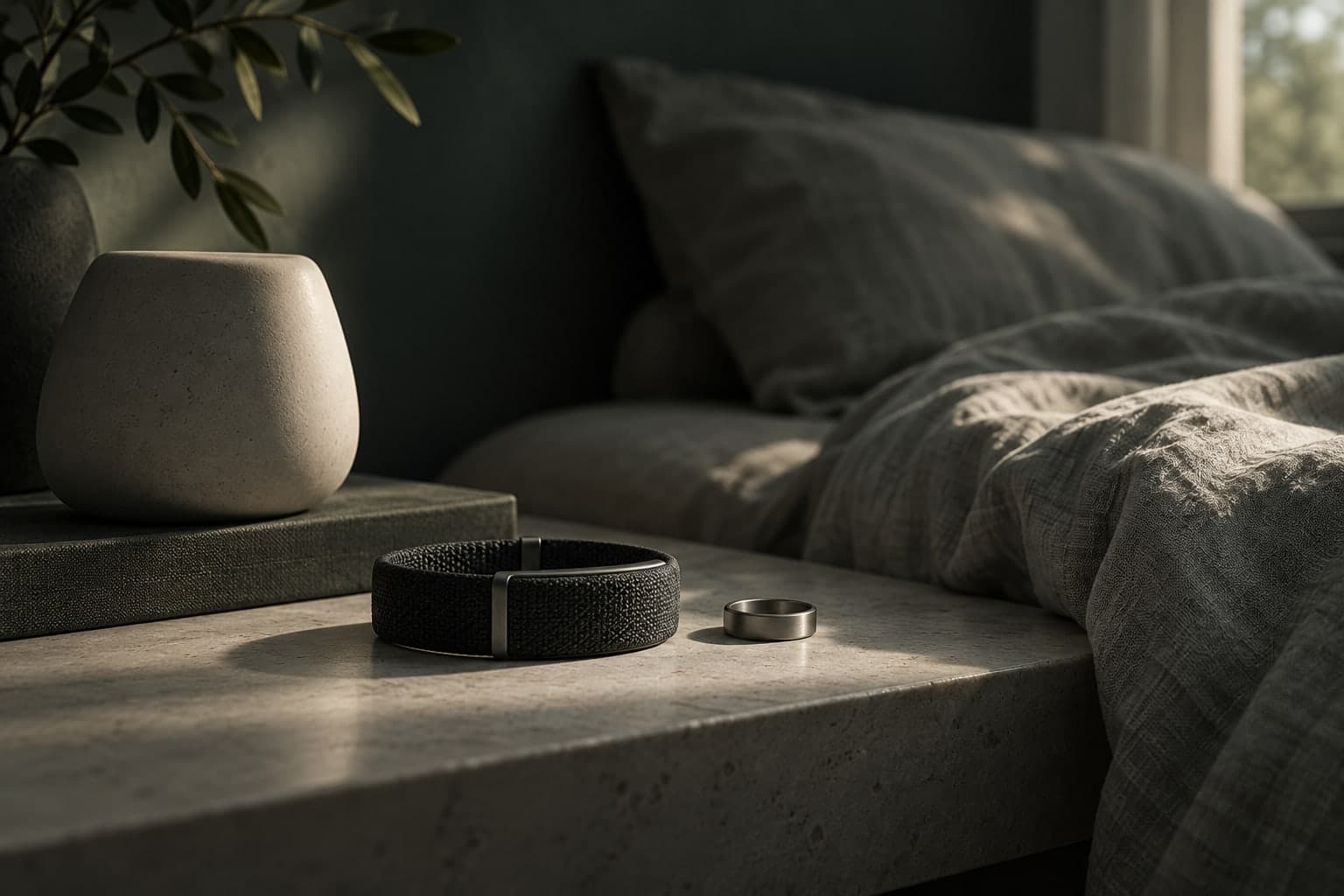
Sources are linked beside the relevant claims. The hero is an AI-generated conceptual illustration, not a photograph of the announced products.